26/27 Preview #10: Olympique de Marseille
Marseille rarely do quiet summers, but this one has been different. Following considerable change both on and off the pitch, OM enter 2026/27 with more measured expectations as Bruno Génésio attempts to bring stability back to the Stade Vélodrome.
Last season
Marseille began last season with UEFA Champions League football and ambitions of building on their second-place finish in 2024/25, but an encouraging start eventually gave way to a difficult second half of the campaign.
Roberto De Zerbi departed in February, with Habib Beye subsequently taking charge until the end of the season. OM remained in the European race but a run of four defeats in six Ligue 1 McDonald's matches during the spring ultimately ended their hopes of securing a second successive Champions League qualification.
They nevertheless recovered when it mattered. A 3-1 victory over Stade Rennais on the final day at the Vélodrome secured fifth place and direct qualification for the UEFA Europa League, ensuring that Marseille would remain on the continental stage despite an uneven campaign.
The coach: Bruno Génésio
There will be few surprises for Ligue 1 McDonald's followers when Bruno Génésio takes his place in the Marseille dugout.
The 59-year-old arrives after two seasons with LOSC Lille, having guided Les Dogues to third place and direct Champions League qualification last season. He previously coached Olympique Lyonnais and Stade Rennais and therefore knows both the championship and the demands of managing one of its biggest clubs extremely well.
Génésio inherits a considerably different project from the one Marseille presented only 12 months ago. Stéphane Richard has replaced Pablo Longoria at the head of the club, while former Stade Brestois sporting director Grégory Lorenzi is now responsible for shaping the squad.
His task will be to bring stability after a season of considerable turbulence. Génésio's Lille sides combined technical quality with tactical flexibility, and there is still plenty of talent at his disposal in Marseille. Igor Paixão, Quinten Timber, Amine Gouiri and Timothy Weah should all have important roles, while Pierre-Emile Højbjerg remains part of the midfield.
Key arrivals
For once, Marseille's summer has been defined more by departures than arrivals.
OM reached August without completing a senior signing as the club focused first on raising funds and reducing its wage bill before allowing Lorenzi to strengthen Génésio's squad. It represents a striking contrast with recent summers, when Marseille regularly carried out extensive recruitment drives before the start of the campaign.
That situation could still change before the transfer window closes. For now, however, Génésio has largely worked with the group already at his disposal while also giving several younger players opportunities during pre-season.
Key departures
Mason Greenwood represents the most significant departure for Les Olympiens. After scoring 37 Ligue 1 McDonald's goals across two seasons at Marseille, the forward joined Fenerbahçe in July in a deal worth €39 million. His departure removes one of OM's principal sources of goals and creativity from the previous two campaigns.
There has also been significant change defensively. Facundo Medina has left for Bayer Leverkusen after only one season at the Vélodrome, while Gerónimo Rulli has joined Manchester City. The Argentina international had established himself as Marseille's first-choice goalkeeper during his two campaigns at the club.
Pierre-Emerick Aubameyang has also left after returning to Marseille for a second spell last summer. His departure, combined with Greenwood's, leaves Gouiri and Paixão with greater attacking responsibility.
Timothy Weah could meanwhile become an increasingly influential figure. One of Marseille's most consistent performers last season, the United States international wore the captain's armband in OM's final pre-season match against Atlético de Madrid and his versatility, intensity and leadership have made him an important part of Génésio's plans.
Remember when...
The 2009/10 season ended an 18-year wait for a Ligue 1 title in Marseille.
Didier Deschamps had returned to the club as head coach the previous summer and quickly built a side capable of challenging at the top of the table. With Mamadou Niang leading the attack, Lucho González pulling the strings in midfield and Souleymane Diawara providing experience at the back, OM gradually took control of the title race.
A 3-1 victory over Stade Rennais at the Vélodrome finally made it official in May 2010, sparking celebrations across Marseille. It remains the club's most recent Ligue 1 McDonald's title.
Cult hero: Chris Waddle
Chris Waddle arrived in Marseille from Tottenham Hotspur in 1989 and quickly became one of the Vélodrome's most beloved foreign players.
The England international was part of one of the greatest sides in OM history, winning three consecutive French championships between 1990 and 1992. Yet it was as much his style as the trophies that secured his place in Marseille folklore.
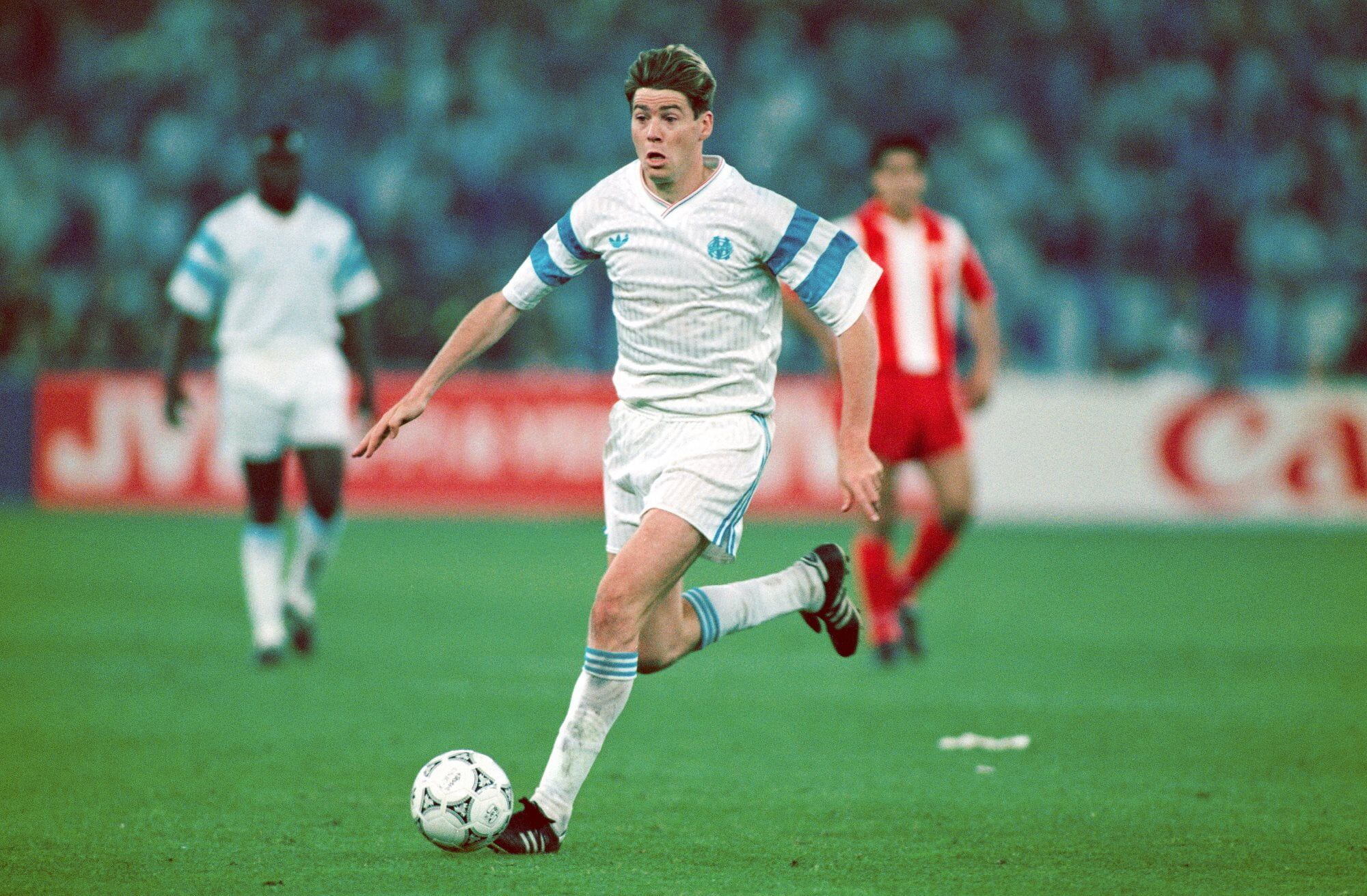
With his distinctive dribbling, creativity and unpredictability, Waddle became known locally as Magic Chris. His connection with the city has endured long beyond his three seasons in Provence and, more than three decades after leaving the club, he remains one of the most celebrated players of Marseille's golden era.