More Than PSG: The Forgotten History of Football in Paris
For much of the modern football imagination, Paris begins and ends with Paris Saint-Germain. The Parc des Princes, global superstars, and Champions League nights have come to define the capital’s sporting identity. Yet this dominance is a recent phenomenon. Long before PSG’s foundation in 1970 the French capital and its suburbs were one of the most fertile and ideologically rich footballing landscapes in Europe.
To understand football in Paris is to understand plurality, fracture, politics, and geography. Unlike provincial cities built around a single institution, the capital produced a dense and fragmented ecosystem: bourgeois clubs, worker-run associations, politically marked institutions and repeated, often unsuccessful, attempts at consolidation. PSG eventually emerged as a solution to that fragmentation - but not before a century of ambition, rivalry and reinvention.
Paris Before PSG: A Crowded, Competitive, but unstable Capital
At the turn of the 20th century, Paris was at the centre of French sporting life. Football was spreading rapidly through schools, universities and multisport associations, often influenced by British amateur ideals. Unlike cities such as Marseille or Saint-Étienne, Paris never coalesced around one dominant football institution. Its size, social stratification and political complexity allowed several clubs to coexist and to compete.
This reality clashed with the municipalist model that came to dominate French sport, where resources and legitimacy tended to be concentrated around a single club per city. Paris resisted this logic for decades, producing instead a succession of powerful but unstable projects: Racing Club de France, Stade Français, Olympique de Paris, Red Star, Club Français — all carrying different visions of what Parisian football should represent.
This pluralism was not limited to historic institutions or professional projects; it also currently lives on at a neighbourhood level, through clubs such as FC Ménilmontant 1871, whose very existence speak to a long Parisian tradition of football as a local, political and communal practice as much as a competitive one.
Racing Club de France: The Standard-Bearer
Founded in 1882, Racing Club de France was one of the earliest and most prestigious sports clubs in the country. Its football section emerged in 1896, and Racing quickly became a cornerstone of the Parisian elite sporting scene.
Based in the suburbs of Colombes, Racing embodied a cosmopolitan vision of football. The club’s golden era came in the 1930s and 1940s, crowned by a Division 1 title in 1936 and five Coupe de France triumphs. It was a club that attracted not only leading players, but also figures who saw football as part of a broader cultural education.
Among them was Albert Camus. Before becoming one of France’s most influential writers and philosophers, Camus briefly played as a goalkeeper for Racing Club de France during his time in Paris. Though his spell at the club was short and interrupted by illness, football left a lasting imprint on his worldview. Camus would later famously write that “what I know most surely in the long run about morality and obligations, I owe to football.”
Racing’s history is also socially significant. The club fielded Raoul Diagne, the first Black player to represent France, and Abdelkader Ben Bouali, one of the first North African internationals — making Racing an early site of diversity in French football.
Yet despite this cultural and sporting richness, Racing’s decline was as dramatic as its rise. Financial crises in the post-war period and the accelerating professionalisation of football gradually eroded its status.
But there was a turn in the early 1980s when Racing briefly returned to the centre of the Parisian football conversation through the Matra-Racing project.
Bankrolled by industrialist Jean-Luc Lagardère via the Matra group, the club was rebranded and relocated to the Parc des Princes in an ambitious attempt to manufacture a glamorous Parisian superclub. Racing recruited internationally recognised players such as Enzo Francescoli and Pierre Littbarski, while also providing the stage for the emergence of David Ginola, then at the start of his professional career.
The ingredients appeared to be in place, yet public interest never truly followed: attendances remained modest, atmosphere sparse, and the project struggled to generate a sense of identity or emotional attachment.
Les Racingmen, now rebranded as Racing Club de France Football, currently compete in the National 3 (fifth tier) this season.
Olympique de Paris: An ambitious early 20th century club
Founded in 1908, Olympique de Paris was one of the capital’s most ambitious early football projects. In the 1910s and 1920s, the club emerged as a major force, winning the Coupe de France in 1924 and regularly competing at the highest level during a period when the cup was the country’s primary national competition.
Olympique de Paris represented a vision of football rooted firmly in the capital itself — modern, ambitious and seeking national recognition. Its rivalry with Red Star was among the most significant in Paris during the interwar period, reflecting two competing trajectories: Red Star increasingly anchored in the northern suburbs, Olympique de Paris seeking to embody Parisian prestige.
The 1926 merger between Olympique de Paris and Red Star, which saw Red Star absorb its rival and adopt the green and white colours still worn today, was emblematic of Parisian football’s recurring pattern. Unity was achieved, but at the cost of identity. Olympique de Paris disappeared, not because of failure on the pitch, but because Paris repeatedly struggled to sustain multiple elite institutions simultaneously.
Stade Français: Post-war Dominance
If Olympique de Paris embodied interwar ambition, Stade Français represented post-war experimentation. Founded in 1883, Stade Français turned decisively towards professional football during the 1940s, at a time when the capital still lacked a stable flagship club. Backed by ambitious leadership, the club assembled one of the most glamorous Parisian teams of the era.
With Larbi Ben Barek on the pitch and Helenio Herrera on the touchline, Stade Français briefly appeared capable of filling the void. Playing at the Parc des Princes and later Jean-Bouin, the club reached the Coupe de France semi-finals in 1949 and won Division 2 in 1952.
Yet this ambition was undermined by chronic instability. Mergers — including a short-lived union with Red Star between 1948 and 1950 — frequent name changes, shifting home grounds and financial fragility prevented Stade Français from establishing a lasting identity or supporter base. Despite brief spells in Division 1 and European competition in the 1960s, the club gradually faded from the elite.
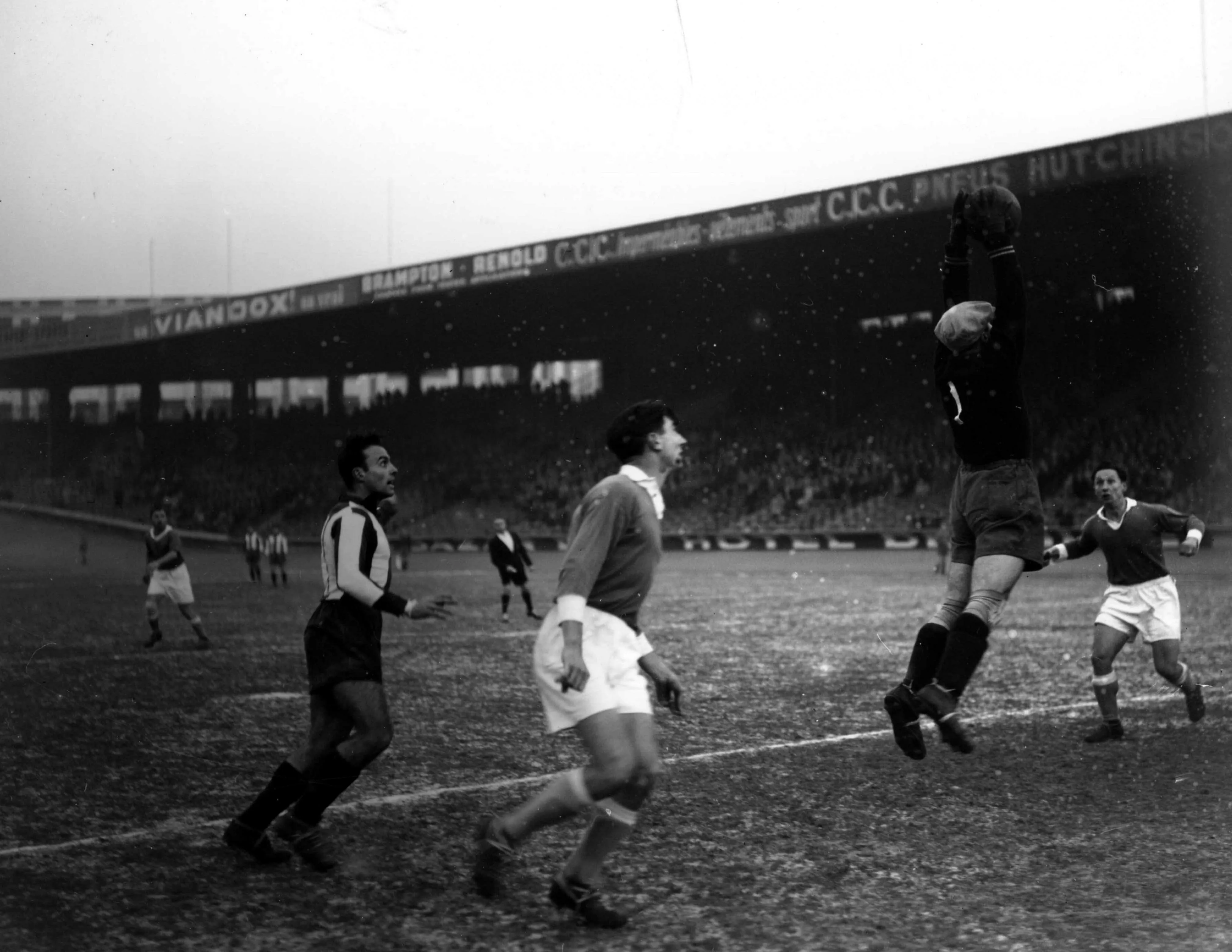
Red Star FC: 129 years of history, and counting
No Île-de-France region club illustrates the complexity of the capital’s footballing history better than Red Star Football Club, a club whose identity has been shaped as much by its results as by its relationship with place, memory and supporters.
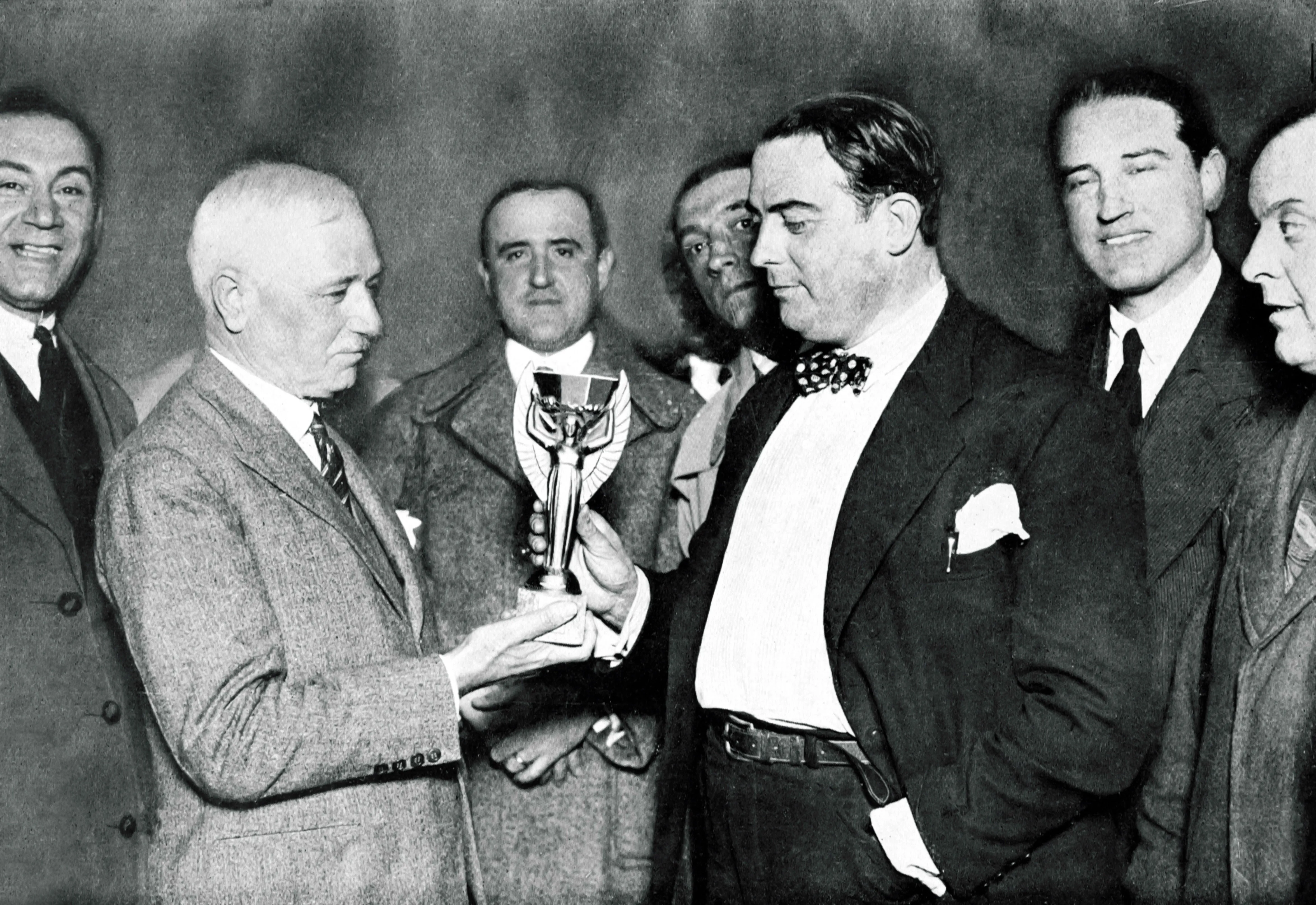
Founded in 1897 in Paris’s 7th arrondissement by figures including Jules Rimet, Red Star began life as a bourgeois, multisport association inspired by British amateur ideals. Its permanent move to Saint-Ouen in 1909, to what became the Stade Bauer, proved decisive. Forced out of central Paris by urban redevelopment, the club settled in a rapidly industrialising suburb that would later become synonymous with the “banlieue rouge”.
On the pitch, Red Star were among the dominant forces of early French football. Between 1922 and 1928, the club won four Coupe de France titles, including a historic run of three consecutive victories. In an era before a national league structure, these triumphs established Red Star as one of the country’s leading clubs. The 1926 merger with Olympique de Paris, which brought the now-famous green and white colours, further consolidated its sporting stature.
Survival and Revival at Red Star
The professional era proved more uneven. Like many Parisian clubs, Red Star struggled to maintain stability amid financial pressures and structural changes in French football. Relegations, returns and prolonged spells outside the top flight gradually pushed the club to the margins of the national game. Yet unlike other fallen institutions, Red Star never disappeared — largely because of its deep local anchoring. From the post-war period onwards, the club became increasingly associated with the political culture of northern Paris and Seine-Saint-Denis.
This identity was not imposed from above, but actively constructed and reinforced by supporters, particularly through the rediscovery of historical figures such as Rino Della Negra, a former Red Star player and Resistance fighter executed by the Nazis in 1944. His memory became central to a supporter culture rooted in anti-fascism, anti-racism and working-class pride.
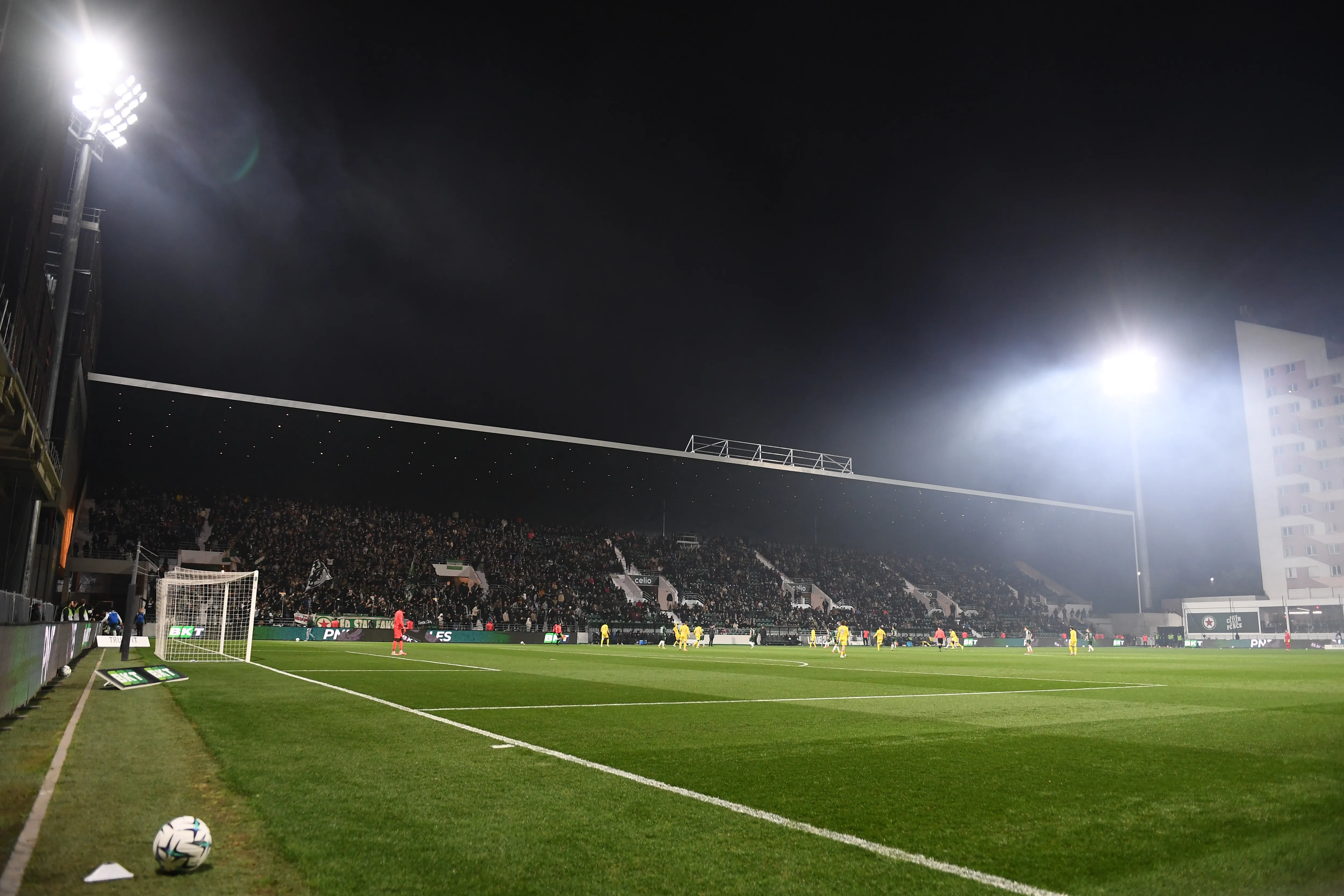
The bankruptcy of 2002 marked a turning point. Relegated to the lower divisions and stripped of professional status, Red Star entered one of the most precarious periods in its history. Yet this crisis also laid the foundations for its modern revival. In the absence of sporting success, supporter culture became the club’s primary source of continuity, with groups such as the Red Star Fans structuring support and transforming Bauer into a political and social space as much as a football ground.
Crucially, this cultural consolidation coincided with a gradual sporting resurgence. During the 2010s, Red Star climbed back up the French football pyramid, returning to the professional game and eventually reaching Ligue 2. Les Audoniens are now fighting at the top of the table with ESTAC Troyes and Saint-Étienne for a promotion place to Ligue 1 McDonald's.
US Créteil-Lusitanos: A Different Suburban Story
Founded in 1936, US Créteil-Lusitanos occupy a distinct place in the footballing geography of the Paris region. Based in Val-de-Marne, east of the capital, Créteil developed outside the historic centres of Parisian power and ambition, instead building a reputation as a stable, community-rooted suburban club. Playing at the Stade Dominique-Duvauchelle, they became a regular presence in the professional game from the late 1990s through the 2010s, spending multiple seasons in Ligue 2 and establishing themselves as a credible second-tier institution.
Créteil also served as an important platform for players who would go on to make their mark elsewhere. Among the most notable is Djibril Cissé, who passed through the club early in his career before becoming a France international and Champions League winner. Others include Blaise Matuidi, who developed at Créteil before rising to the very top with Paris Saint-Germain and the French national team, and Steed Malbranque, later a Premier League regular.
Paris FC: The Other Inheritance of 1970
If Paris Saint-Germain came to embody the resolution of Parisian football’s long search for a dominant club, Paris FC would be a sign of its unfinished business. Founded in 1969 and briefly united with Stade Saint-Germain in the merger that created PSG in 1970, Paris FC split away almost immediately, setting the tone for decades of divergence.
While PSG rapidly became the capital’s flagship, Paris FC endured a long period of obscurity, drifting through the lower divisions and struggling to establish a clear identity in a city already dominated by its neighbour. Lacking the financial backing, political support and symbolic momentum that propelled PSG, Paris FC had to fight their way back up the divisions in recent years.
The club re-emerged in the last decade and earned promotion back to Ligue 1 for the first time in 46 years under their new ownership structure led by LMVH owner Bernard Arnault and Red Bull. The club now hope to position themselves not as a rival to PSG, but as a complementary presence within the Parisian landscape. That relationship is perhaps best captured by president Pierre Ferracci’s blunt assessment of the imbalance: “They are on a different planet.”
In men’s football, the rivalry remains muted. In the women’s game, however, Paris FC have carved out a more competitive role, regularly challenging PSG and, alongside them, standing as the only Parisian clubs capable of contesting the dominance of OL Lyonnes.
In this sense, Paris FC’s resurgence and return to Ligue 1 McDonald's is a reminder of the hidden truth about Parisian football history: the capital and its greater region has always produced more than one club - even when one at first sight eclipses all others.
READ MORE:
>>Les Voisins: Paris FC and Paris Saint-Germain reunited after 53 years