Alexandre Dujeux, the mastermind behind Angers's Ligue 1 rise
Few stories in Ligue 1 McDonald's this season are as compelling as Angers SCO’s. Tipped by many for a relegation battle, the club from Anjou - operating with the smallest budget in the league - have defied expectations to sit 10th after 16 games, playing proactive, coherent football along the way. At the heart of that collective overachievement is Alexandre Dujeux, a coach whose influence has been built patiently and without noise.
Appointed in March 2023, Dujeux first stabilised a struggling side before guiding the club back to Ligue 1 and then securing its status. This season represents a new phase. Rather than merely surviving, Angers have established themselves in the league’s middle ground, competing on equal terms with sides operating on far greater resources.
“It’s very good,” Dujeux says of his side’s start in an interview with L'Équipe. “But with this group, the idea is always progression.” That insistence on forward momentum has shaped Angers’ approach throughout the season. Fully aware of the club’s financial realities, the coach has been careful not to let context become a constraint. “If you’re too aware of limitations, you don’t allow yourself anything,” he explains. “We want to allow ourselves a lot.”
On the pitch, that ambition has translated into a strong collective identity. Dujeux places a heavy emphasis on responsibility, encouraging his players to adapt to situations rather than rely solely on instructions. At training, solutions are not always given immediately, with the aim of preparing the squad to respond to tactical changes during matches. “We try not to give them the answers straight away,” he notes. “They need to be able to solve problems.”
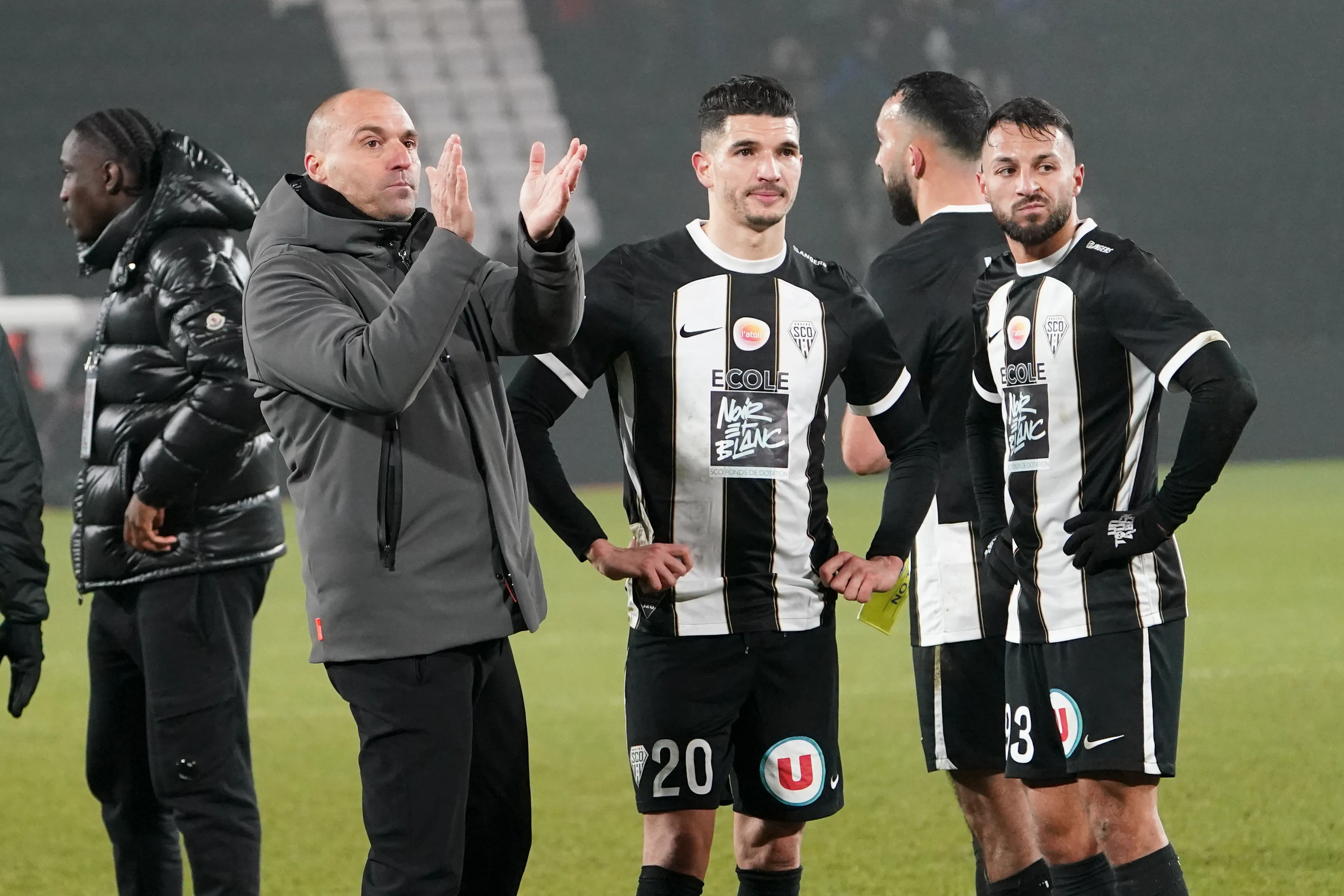
Angers SCO in numbers this season
→ 5 wins, 4 draws, 7 defeats
→ 17 goals scored, 18 conceded
→ Five clean sheets already recorded
→ Nine matches decided by a single goal
→ Majority of fixtures finishing under 2.5 goals
→ No player has scored more than three league goals.
'I love all my players'
Flexibility has become a defining feature of Angers’ season. Dujeux is equally clear that his own ideas are not immutable. After a poor defensive session ahead of a defeat to Lens, he altered his plans following discussions with the players. “The idea isn’t to die with your ideas,” he says, underlining a pragmatic streak that has served the team well.
Beyond tactics, Dujeux’s management style is grounded in human relationships. Squad decisions are handled individually, with consideration given to context, development and personal circumstances. “I love all my players,” he says. “I don’t play them all, but I love them all.” It is an approach he describes as managing “like a good father”, balancing empathy with clear expectations.
That perspective has been shaped by personal experience. Two years ago, Dujeux lost his wife, an event that has inevitably influenced how he views his profession. “I don’t want it to be a weakness,” he explains. “I want it to become a strength. A form of tribute.” Football, while central to his life, is no longer all-consuming. “It’s very important,” he adds, “but it remains football.”
READ MORE:
>>Les Minots: Marseille finally playing the long-awaited youth card
>>AFCON: Hosts Morocco start with a win, Sinayoko on the scoreline for Mali